
Dog Clutch, Dog Replacement
 Click Image to Enlarge
Product Description
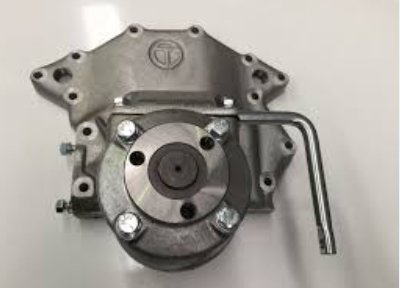
Replacing dogs on dog clutches.
Dog clutches have been used on inboard boat motors for over possibly 60 years ( pre 1970 )
With the Ford and some Chev engines the early models were driven off the flywheel end of the engines.
As the Ford and Chev SB 400ci. don’t have a fully internal balanced crankshaft assemblies
perhaps the inventers thought it safer to adopt a dog clutch system off the flywheel.
As years past this clutch configuration was adopted to suit timing case end of the engines to achieve the engine to be mounted lower in the boat and with a lesser angle on the prop shaft thus allowing the engine to be mouted further back in the boat so it could be installed in smaller boats and to obtain the driver’s seat mounted further back.
To my knowledge Holden 6’s & V/8’s, Ford 6’s. & Chrysler 6.s &V/8’s and possibly a few other brands were only driven off the front.
In this configuration the harmonic balancer has to be removed to allow a crankshaft dog to be fitted.
If certain care is maintained this configuration is successful without an harmonic balancer which is a dampener to soak up unwanted harmonics/ vibrations of the rotating engine assembly.
This success has been proved in our ski racing career by us.
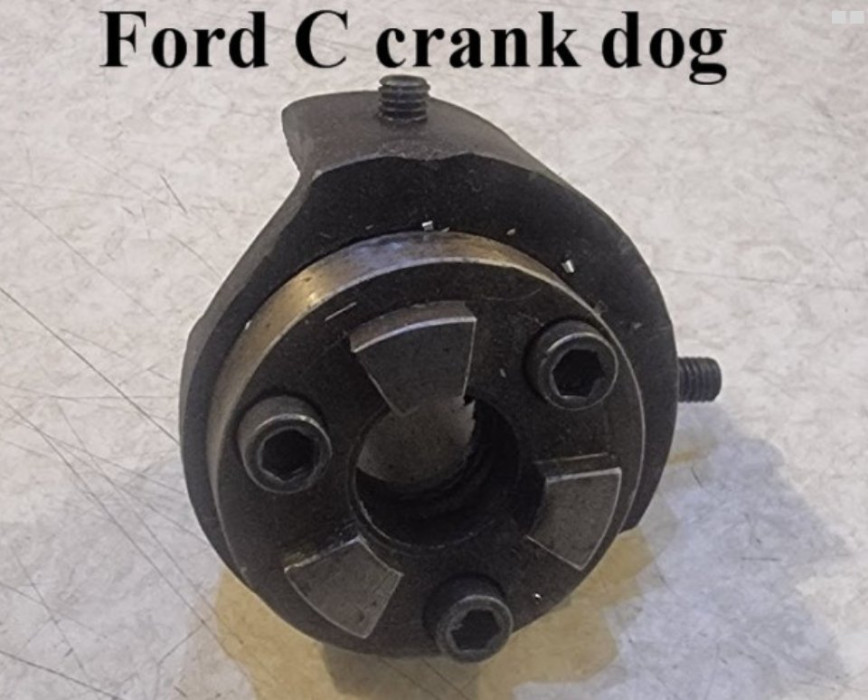
As time progressed the one piece crank dog was side-lined to except the present 2 piece crank dogs which allowed better heat treatment of the dog piece along with far easier replacement if required.
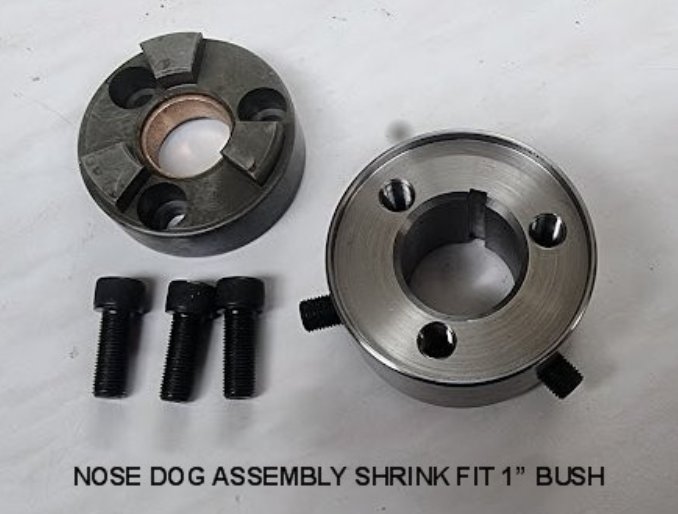
There is 2 different options of the crank assembly with one type where the crank piece requires heating to expand the hole size so it can be tapped on with piece of wood or similar until it comes to rest against the crank timing gear. It is held in place with 2 cap screws and relies on the crankshaft key to prevent it from spinning.
This type of assembly suits the common 1” spigot shaft to fit without addition machining.
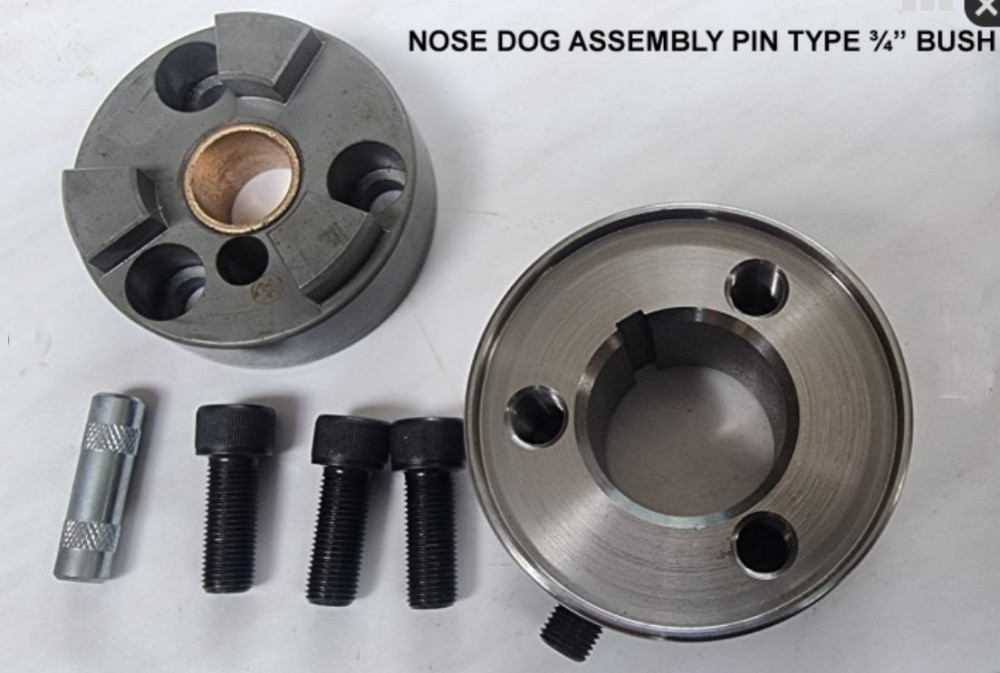
The second option is fitting the 2 piece dog with an extra 3/8” pin to locate the dog and crank piece to the crankshaft. Using this type the spigot shaft requires machining back to ¾”. The crank dog piece does not require heating to fit on the crank as the hole is slightly bigger and can be tapped on and is held in place with a single cap screw. Then the 3/8” hole is drilled down through the dog piece which cuts into the crank giving added and better location when the supplied pin is installed.
The purchase price for the 2 different types of the dog assemblies usually are the same.
The other part of the dog is the slider dog. These will vary depending on the brand of the clutch.
Some clutches have an internal spline of 10, 9, or 6 splines. The slot for the fork to engage it can vary depending on brand name of the complete clutch.
Note to remember is after installation is complete, the internal fork is there to slide the slider dog into gear only and not hold it in gear therefore for the best adjustment the fork should rest slightly back in the slider slot and with no friction wear.
When the clutch is in good working order the under cut of the teeth (3) on both dogs will keep it in gear.
A tell-tail sign of wear is when the dogs drop out if you back off power quickly and owing to the teeth getting rounded off.
If difficulties occur disengaging the clutch the problems can be, engine idle to high (above 700rpm). worn or loose internal fork, worn or external linkages, worn clutch handle.
Overall the dog clutch is a very good drive system when service properly.
All the above information is compiled by Bob Heaney of Precision Marine through our own years of experience.
more information about this product
View Video Galleries
Helpful information for the boaters; tips and entertainment collection.
View Photo Galleries
A collection of photo galleries related to
ski-racing, fishing and water sports.
Share with